Life in Probabilities
“There’s a 40% chance this works because of A, 25% because of B, 10% something we haven’t thought of, and 25% we’ve got it all wrong from the start.”
We really, really want the world to make sense in a straight line. We want “A caused B which caused C.” Clean. Easy to understand. Fits nicely in our heads. When someone asks “why did this happen?” we feel good when we can point to one reason, one clear chain of events.
But the world doesn’t work like that most of the time.
Usually, there isn’t just one cause. Things happen because of a bunch of stuff mixed together, each piece with its own chance of happening, all bumping into each other in messy ways. Life isn’t a computer program where you put something in and get the same thing out every time. It’s more like poker: you can play perfectly and still lose. You can make dumb moves and still win. What you do and what happens aren’t locked together - they’re just probabilities.
This makes our brains really uncomfortable. We’re built to find patterns, to learn from “this caused that,” to guess what’s coming based on what already happened. But we’re built for a much simpler world than the one we live in now. Our old ancestors could think “when I do this, that happens” and be mostly right. Throw a rock, it goes where you expect. Plant seeds and water them, they grow. Short and clear.
Now everything is tangled up with feedback loops and real randomness. But we still want that old simplicity. So we make it up, even when it’s not there.
When a startup wins, we write about how smart the founder was. When it crashes, we point at the obvious mistakes. But really? There’s maybe a 40% chance they won because they stumbled into the right product at the right time, 25% because they launched exactly when the market was ready, 10% because someone knew someone who introduced them to the right investor, and 25% just pure luck we can’t even name. Same company, same decisions, but one guy catches a cold on the day of the big meeting - boom, totally different outcome.
But we can’t tell that story. It doesn’t feel right. It doesn’t teach us anything useful. So we make it simple: “They won because they were smart and worked hard.” “They lost because they ignored their customers.” Clean stories. Easy to teach. Also probably wrong, or at least missing most of the picture.
What’s even worse: doing things right can still fail. Doing things wrong can still work. You can do everything perfectly and lose. You can screw up everything and win. And even after it’s all over, even with all the info right there, we usually can’t tell which was which.
This messes everything up: we can’t really learn from what happened. That founder who won might have won despite their plan, not because of it. The one who lost might have had a great idea that just got unlucky. But we act like winning proves you were right and losing proves you were wrong. We copy what winners do, not realizing we might be copying random stuff from people who just got lucky.
But here’s the real problem: trying to think about the future. When we try to imagine something that hasn’t happened yet, it gets crazy complicated crazy fast. Not just “what will happen?” but “If A happens then B, but if NOT A then maybe C, and if B then we need to think about D and E, but if C then…”
Every choice doubles the options. Two become four become eight become sixteen. We have to hold way more stuff in our heads. And that’s if we even know what the choices are, which we usually don’t.
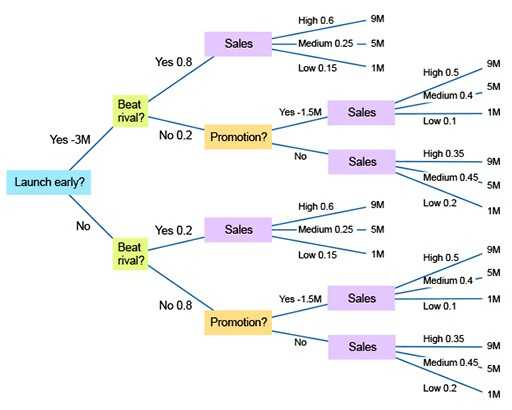
So what do we do? We squash it back down. We pretend there’s one main path and ignore everything else. We say “this is probably what’ll happen” and stop thinking about other options. We have to, because our brains literally can’t hold that much “maybe.”
But here’s what we lose: we can’t see what’s actually possible anymore. We mix up our simple story with reality. When something outside our story happens, we’re shocked - even though it was always possible. We say “nobody saw this coming” when we really mean “I didn’t think about this because it wasn’t in my story.”
I catch myself doing this all the time. When I plan something, I only imagine one path: the most likely one, or the one I want, or just the first one I thought of. I know things could go differently. But I don’t actually remember that. I don’t walk around calculating probabilities. I just walk around with one story in my head.
Then if something outside that story happens, and I feels like chaos. Feels like the world is being random and unfair. But it’s not. It’s just doing what it always does - running on probabilities. I’m the one who pretended everything was certain, because that’s easier to think about.
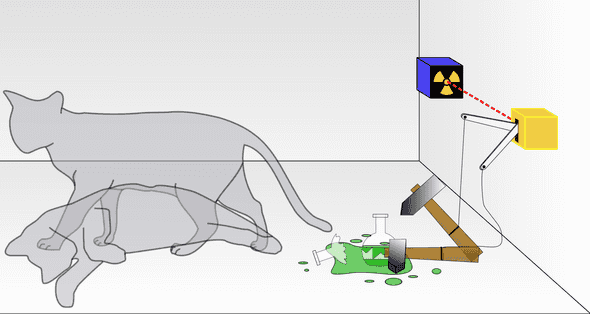
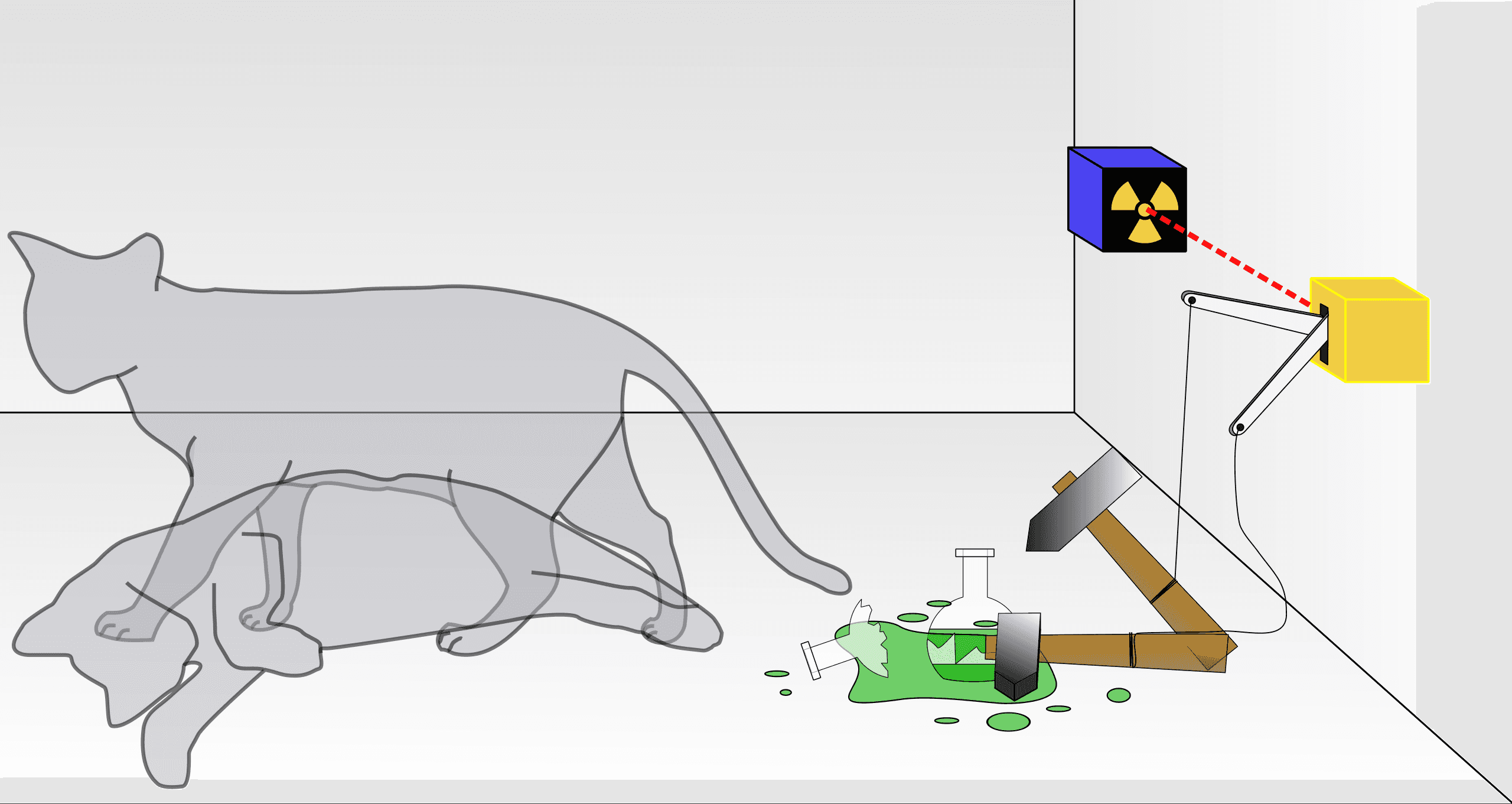
Fun fact: Even the basic building blocks of everything - atoms, electrons, photons - run on probabilities, not certainties. In quantum physics, particles don’t have definite positions or states until you measure them. Before that, they exist in a “superposition” - all possible states at once, each with different probabilities. An electron isn’t “here” or “there” - it’s in a probability cloud, with higher chances of being in some spots than others. This isn’t just a measurement problem or lack of information. The universe genuinely doesn’t “decide” where the particle is until something forces it to. The famous thought experiment of Schrödinger’s cat illustrates this weirdness: a cat in a box is both alive and dead (in superposition) until you open it and force reality to pick one. The universe itself is probabilistic at its core, not just our understanding of it.
So what do we do? We can’t actually think about infinite possibilities. We’re not computers. We need to simplify stuff to work.
But maybe we can at least know we’re doing it. Maybe we can hold our stories a bit looser. When we say “A caused B,” maybe remember the invisible footnote: probably, partly, along with C and D and ten other things we haven’t noticed, in a way that might not work the same next time.
Maybe we should get okay with saying “I don’t know” more. Not giving up - just being honest about reality.
Maybe we can tell stories more truthfully - acknowledge both luck and uncertainty, instead of acting like everything was predetermined. “We won because we got lucky in these specific ways, and honestly we still don’t fully get why it worked.” “We lost even though we did a lot of things right, and we’re not sure what we could’ve done differently.”
These stories feel less good. They don’t give us simple lessons. They don’t let us feel like we’re in control. But they’re closer to the truth. And long term, truth beats comfort.
Life isn’t a program. It’s a poker game. The sooner we stop expecting things to work like code, the sooner we can be okay with the messy, random, beautiful way things actually are.
